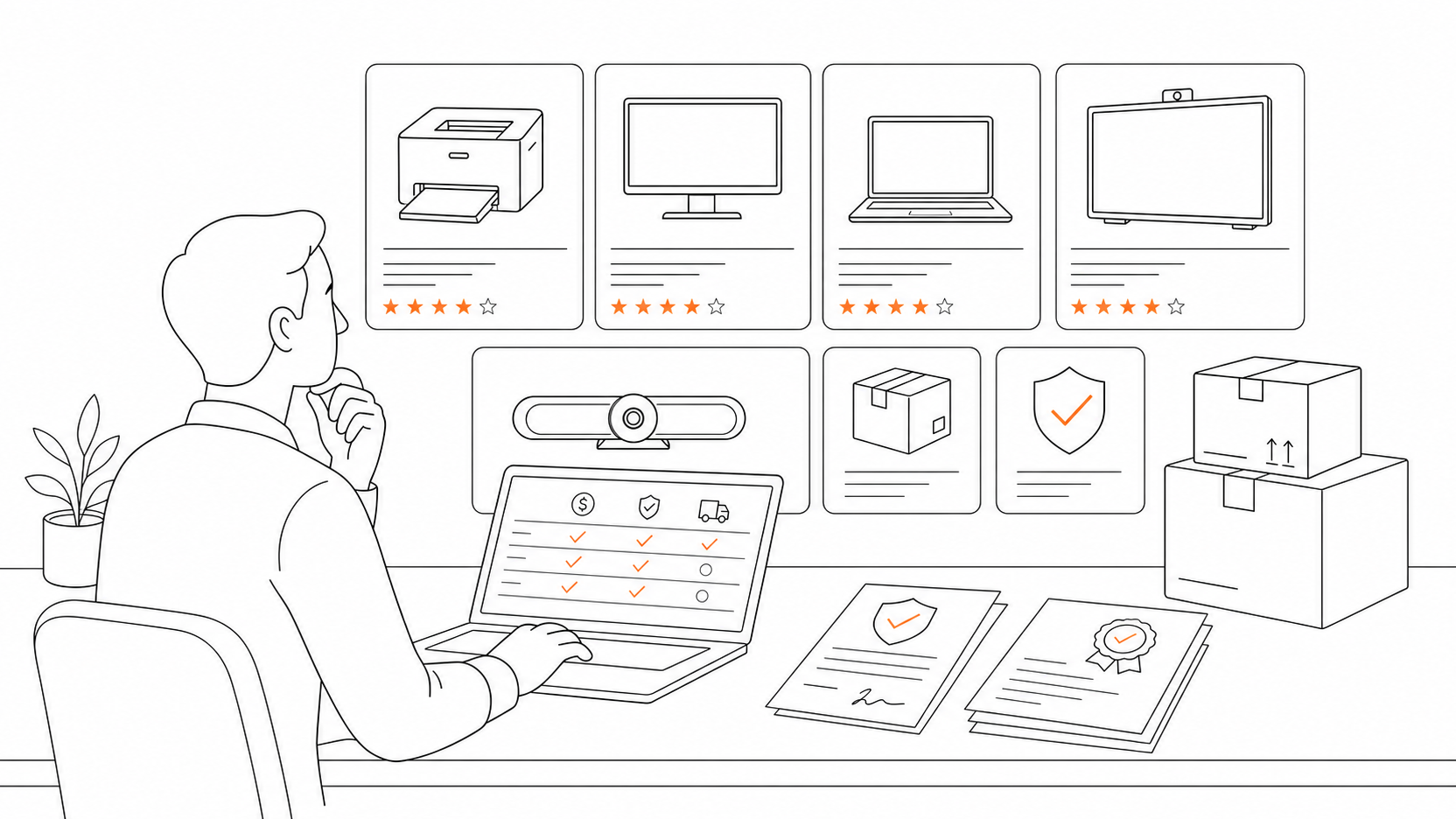
A school, training company, or SaaS startup can lose a surprising amount of time after the decision is already made. The vendor is approved, the employee is hired, the partner contract is agreed, or the student program is ready, but the document still needs to be generated, routed, signed, stored, and later found again. That is the operational gap Legale tries to address.
The short version of this Legale review: Legale.io is not an LMS, course marketplace, or study app. It is a contract lifecycle management and electronic signature platform for teams that need document automation, signing workflows, traceability, and compliance evidence. It can make sense for education and SaaS operations teams with repeatable HR, finance, procurement, legal, or partner-document workflows. It is less convincing if you only need occasional one-off signatures, a consumer-friendly form builder, or a platform with obvious public pricing for every enterprise scenario.
This review is based on Legale.io's official website, API documentation, SLA page, legal framework page, Trust Center page, and general electronic-signature legal context. We did not run a private implementation, audit a customer tenant, or verify private security reports. Our editorial process is explained in our editorial policy, and our site background is available on our about page.
Legale review: what the platform actually is
Legale.io describes itself as a CLM, or contract lifecycle management, platform that combines document management, automation, electronic signatures, notarial services, digital governance, and AI into one workflow ecosystem. Its homepage also says it connects with CRMs and ERPs such as SAP, Salesforce, and ADP Payroll, and that its API can integrate with existing company systems.
That positioning matters. A basic e-signature tool helps you get a PDF signed. A CLM-oriented platform tries to cover a wider chain: create the document, route it, sign it, store it, prove what happened, and keep the workflow connected to the rest of the business. For education and SaaS teams, that wider scope is useful when documents repeat across departments: instructor contracts, supplier agreements, refund approvals, HR forms, non-disclosure agreements, reseller paperwork, and finance authorizations.
The product is also clearly business-facing. Legale lists use cases for finance, sales and contracts, human resources, legal departments, and operations. That makes it a better fit for back-office workflow than for student-facing learning delivery. If your main buying question is course quality, tutoring depth, or creator tools, compare this with learning-platform content such as our Italki review or Coursera vs Skillshare comparison. If your question is "how do we stop chasing signatures and documents across email," Legale is more relevant.

Where Legale looks useful for schools and SaaS teams
Legale's strongest fit is repeatable document operations. The official site highlights templates, version control, document authenticity checks, electronic signatures, bulk signing, CSV automation, Microsoft Word editing, WhatsApp signature sending, cloud storage, Power BI reporting, and mobile access. Not every team needs all of that, but the feature mix points to one practical use case: reducing manual document handoffs across departments.
For a school or training organization, that could mean employment contracts, instructor agreements, internship documents, supplier approvals, policy acceptances, travel reimbursement forms, or safety acknowledgements. For a SaaS company, it could mean sales contracts, vendor onboarding, NDAs, HR documents, partner agreements, and internal approvals. In both cases, the value is not only the signature; it is the audit trail and retrieval path after signature.
Legale's API documentation adds another useful clue. It says the API supports electronic signature workflow creation through a single JSON file, different signature technologies such as token, cloud certificate, auto-generated signature, or SMS, and document template management. That is relevant for teams with an internal portal, LMS-adjacent admin system, CRM, or HR system that needs to trigger signature flows rather than manually upload every file.
The limitation is that integration value depends on implementation capacity. An API can be powerful, but it still requires someone to map business rules, test edge cases, train staff, and own support. Small teams without a technical operator may get more value from a simpler signing tool unless their document volume is already painful.
E-signature and compliance: useful, but jurisdiction matters
Legale makes several compliance-oriented claims that buyers should read carefully. Its simple e-signature page says Legale.io offers certified simple e-signatures with international validity, refers to eIDAS principles, and describes evidence around content integrity, signer authentication, and consent. Its legal framework page lists Chilean Law No. 19,799 on electronic documents and electronic signatures, along with related decrees and privacy law references. Its country coverage page also maps signature requirements across several Latin American jurisdictions.
Those details are useful because education and SaaS teams often operate across borders. A remote instructor may be in one country, the company in another, and the customer contract governed by a third jurisdiction. But the practical takeaway is not "every document is automatically safe." The correct takeaway is that Legale appears to document its legal framework and supported signature levels, while buyers still need counsel to confirm whether a specific document type can be signed electronically in the relevant jurisdiction.
General electronic-signature law is also layered. Electronic signatures can have legal effect under systems such as eIDAS in the European Union and ESIGN/UETA-style frameworks in the United States, but the required signature level can vary by document type, country, and risk profile. That is why Legale's own pricing FAQ tells users to verify acceptance of e-signatures in the applicable jurisdiction and obtain consent from all parties.
For lower-risk internal approvals, policy acknowledgements, routine contracts, and trusted-party workflows, Legale's simple and advanced signature options may be enough. For notarial, judicial, regulated finance, or high-stakes employment documents, the buyer should validate the required signature standard before rollout.
Pricing and plan limits to check before you buy
As checked on June 19, 2026, Legale's public pricing section listed a free account with up to 4 documents per month, an Individual plan at US$12/month or US$102/year with 10 documents per month, a Professional plan at US$35/month or US$504/year with 20 documents per month, and a Business plan at US$50/month or US$420/year with 20 documents per month. The same page also points larger or alternative needs toward a tailored plan.
The important detail is the document limit, not only the headline subscription price. A school, agency, or SaaS company can burn through 20 document workflows quickly during hiring, procurement, enrollment, or sales season. Before choosing a plan, estimate monthly document volume by department: HR, finance, sales, operations, and legal. Then add a buffer for renewals, corrections, and repeated signature attempts.

Pricing pages also change. Treat the numbers above as a snapshot, not a permanent quote. For a multi-team rollout, request current plan terms, overage rules, user limits, support response commitments, cancellation terms, data export options, and whether integrations or advanced signature methods cost extra.
Security, SLA, and implementation signals
Legale's Trust Center page says the company uses a Drata-powered trust portal that provides information about ISO 27001 certification, security controls, penetration testing results, and related compliance posture. Its homepage navigation also references ISO 27001, ethical hacking, SOC 1/SOC 2, security policy, personal data protection, and service-level documentation.
The SLA page is especially useful because it gives a concrete availability commitment. It states committed annual availability of 99.5% for the electronic signature service, defines downtime and incident levels, and says annual availability is calculated from available minutes minus downtime. It also lists exclusions such as external network failures, improper client use, unauthorized access caused by client-side security failures, and beta or pre-production testing.
For education and SaaS operations, that means Legale should be evaluated like infrastructure, not just software. If signed documents block payroll, onboarding, procurement, or revenue contracts, ask what happens during downtime, how support tickets are escalated, how documents are exported, and whether there is a contingency process for urgent signatures.
The security material is promising, but public pages are not a substitute for procurement due diligence. Before using Legale for sensitive student, employee, or customer records, review the DPA, privacy policy, subprocessor list, retention controls, audit logs, region of data storage, and incident-notification terms.
Who should consider Legale, and who should skip it
Legale is worth considering if your team already has recurring document workflows and needs better traceability than email plus shared drives. It is especially relevant for teams that operate in Latin America, need HR or finance document automation, want API-triggered signature flows, or care about documented legal and security frameworks.
It is probably too much if you only send a few documents per month, do not need templates or workflow automation, or want a tool focused purely on classroom learning. It may also be a poor fit if your contracts are mostly negotiated manually in long Word redlines and your team is not ready to standardize templates or approval flows.
There is also a content-fit note for readers of this site. Compared with creative or course-production tools like our Picsart review or operational software reviews like our EaseUS review, Legale belongs in the administrative layer. It will not improve course content directly, but it may reduce friction around the agreements, approvals, and compliance documents that sit behind education and SaaS operations.
Practical buying checklist for Legale
Before booking a demo or starting a trial, write down five things.
First, list the documents you want to automate: NDAs, employment contracts, instructor agreements, refund approvals, vendor onboarding, sales contracts, policy acknowledgements, or board documents. Second, estimate monthly volume and peak-season volume. Third, identify which documents require simple, advanced, qualified, notarial, or local-law-specific signatures. Fourth, decide whether Legale needs to integrate with a CRM, HR system, LMS admin flow, finance tool, or internal portal. Fifth, define who owns rollout: legal, operations, IT, HR, or finance.
The strongest Legale rollout will start with one repeatable workflow, not every document at once. Pick a department with high friction and clear rules, build the template, test the signature path, confirm legal acceptance, train the team, and then expand.
FAQ
Is Legale an LMS or online course platform?
No. Legale is better understood as CLM, document automation, and e-signature software. It may support education organizations operationally, but it does not deliver courses, manage learners, or host a course marketplace.
Is Legale good for schools?
Legale can fit schools, training companies, and education SaaS teams that manage recurring HR, supplier, instructor, finance, or policy documents. It is less relevant for teams that only need student-facing learning tools.
Does Legale have a free plan?
Legale's pricing page, checked on June 19, 2026, listed a free account allowing up to 4 documents per month. Buyers should verify current limits and terms before relying on that allowance.
Does Legale support API integrations?
Yes. Legale's API documentation says teams can create electronic signature workflows with a JSON file, use multiple signature technologies, and manage document templates through the API. Implementation effort still depends on your systems and technical resources.
Is Legale legally valid for every document?
Not automatically. Legale publishes legal-framework material and signature options, but signature requirements vary by country and document type. For regulated, notarial, judicial, employment, or financial documents, confirm the required signature standard with counsel.
Title Candidates
- Legale Review: CLM and E-Signatures for Education Teams
- Is Legale Worth It for SaaS and School Document Workflows?
- Legale Pricing, Security, and Contract Workflow Fit in 2026
- Before You Choose Legale: 7 Document Workflow Checks
- Legale.io Review: When E-Signatures Need More Than PDFs