Sole Treadmills Review: F63 and F80 Buying Guide
Buying a treadmill for a home office or study space is different from buying one for a commercial gym. You are not only asking whether it can handle speed. You are asking whether it can sit in a spare room, fold away when needed, stay quiet enough for shared housing, and keep working without another monthly subscription.
That is where Sole treadmills are interesting. The brand is not trying to look like a streaming fitness studio first. Its strongest argument is simpler: sturdy hardware, clear controls, useful built-in training options, and no required paid membership for the basic experience. The tradeoff is that Sole machines are still large pieces of fitness equipment, and the more capable models cost real money.
This Sole Treadmills review focuses on the F63 and F80 because they are the two models most buyers will compare first. We use official Sole product pages, current prices checked on June 11, 2026, and independent editorial coverage from Good Housekeeping and SELF. For how we handle review sourcing, see our /editorial-policy/. For background on the site, see /about/.
Sole Treadmills Review: Who Should Consider One?
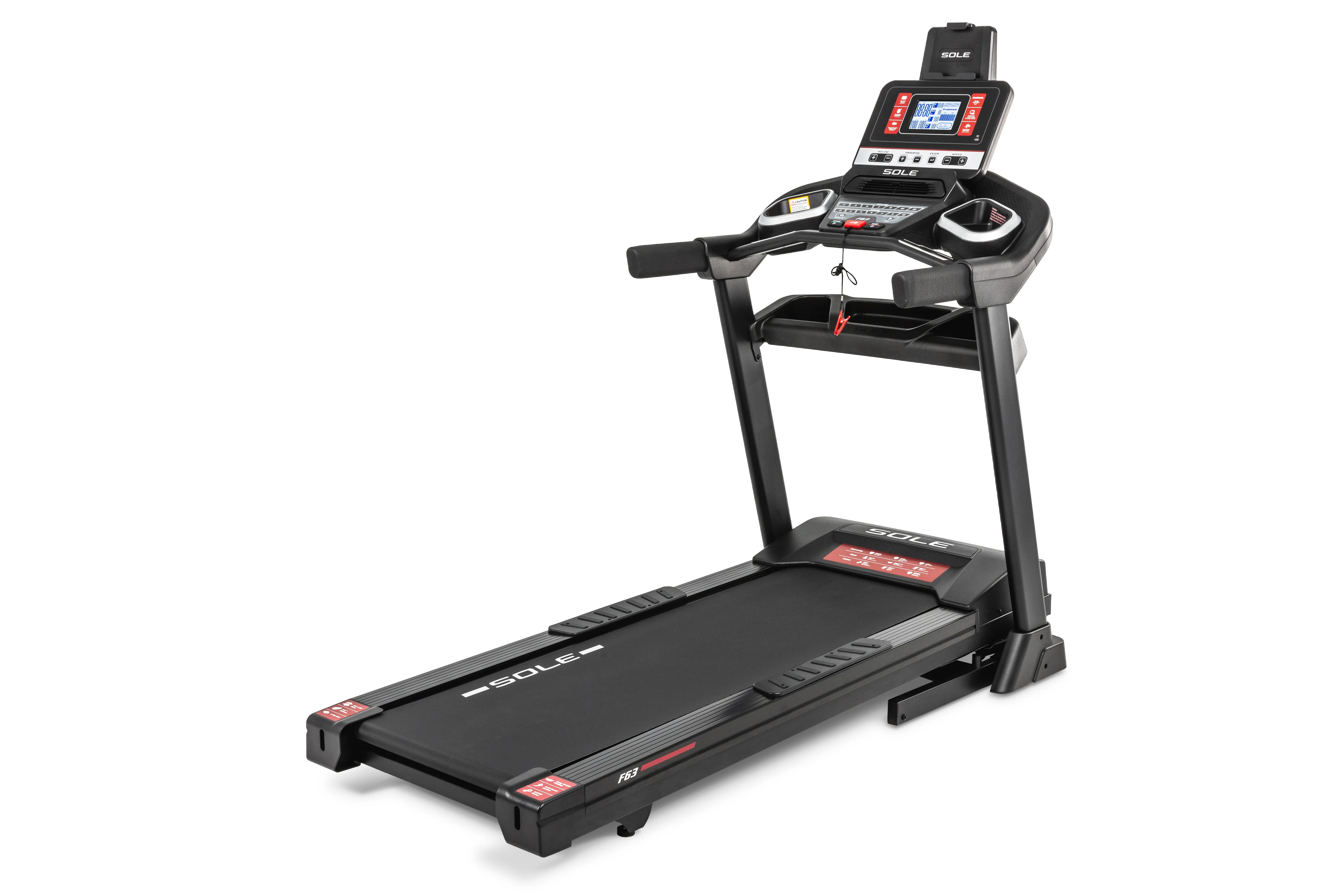
Sole is a good fit if your main goal is consistent home training rather than a class-led fitness ecosystem. The official F63 page lists a 3.0HP motor, 0.5-12 MPH speed range, 15 incline levels, a 20 x 60 inch running surface, a 325 lb weight capacity, and lifetime frame and motor coverage. That is a practical spec sheet for walking, jogging, and moderate running in a home setting.
The F80 moves closer to a serious home-gym machine. Sole lists a 3.5HP motor, 22 x 60 inch deck, 350 lb weight capacity, 10.1 inch touchscreen, wireless charging, Wi-Fi, preloaded apps, and lifetime frame and motor coverage with longer deck and parts coverage than the F63. Sole also promotes the F80 around no required subscription, folding storage, and built-in app freedom.
For a reader who works, studies, or teaches from home, the most relevant question is not whether a treadmill has the flashiest screen. It is whether the machine reduces friction enough that you actually use it. Sole's simpler ownership model helps here: you can walk during lecture prep, take a lunch run, or do low-intensity movement breaks without signing into a paid training platform first.
F63: The Practical Starting Point
The F63 is the model to start with if you want a capable treadmill without paying for the biggest console or widest deck. On the official page, the sale price was $1,099.99 when checked on June 11, 2026, down from a listed regular price of $1,299.99. Prices can change, so treat this as a timestamped reference rather than a permanent discount.
Good Housekeeping's 2026 treadmill guide describes the Sole F63 as a dependable option for beginners or casual runners and highlights its speed range, incline levels, LCD console, pulse grips, tablet holder, USB charging, and Bluetooth speakers. In its folding treadmill guide, Good Housekeeping also notes that the F63 feels more like a traditional treadmill than a compact folding unit, which is useful if you care more about stability than ultra-small storage.
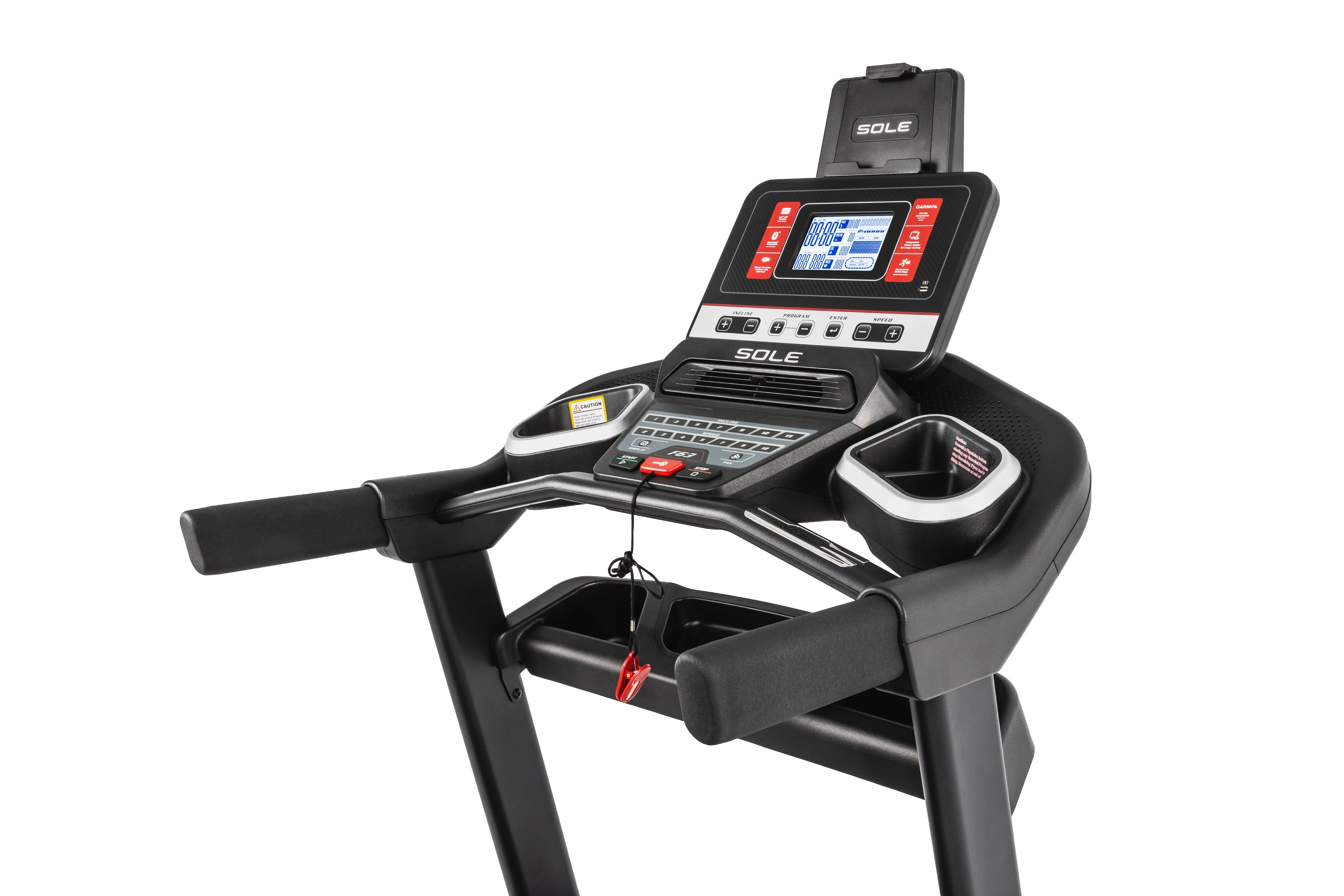
The F63's main strength is that it covers the basics without turning every workout into a software decision. You get a full-length 20 x 60 inch running surface, 7 pre-programmed workouts, 2 user-defined workouts, console speed and incline controls, and a kick-release folding mechanism. For walking breaks between study blocks or steady jogging after work, that is enough machine for many households.
The limitation is also clear. SELF's folding treadmill coverage praised the F63's clear controls but noted that testers found it could feel shaky at faster paces, starting around 9 MPH. That does not make it a poor treadmill; it means faster runners and heavier interval users should think carefully before choosing the entry model.
F80: Better For Heavier Use And Bigger Strides
The F80 is the more convincing option if you expect frequent running, a larger user weight range, or a wider deck. Sole lists a 22 x 60 inch running surface, 350 lb weight capacity, 0.5-12 MPH speed range, 15 incline levels, 10.1 inch touchscreen, Bluetooth speakers, Sole+ integration, Wi-Fi, and preloaded apps. The official page also says it folds to 4 ft x 3 ft and carries lifetime frame and motor coverage.
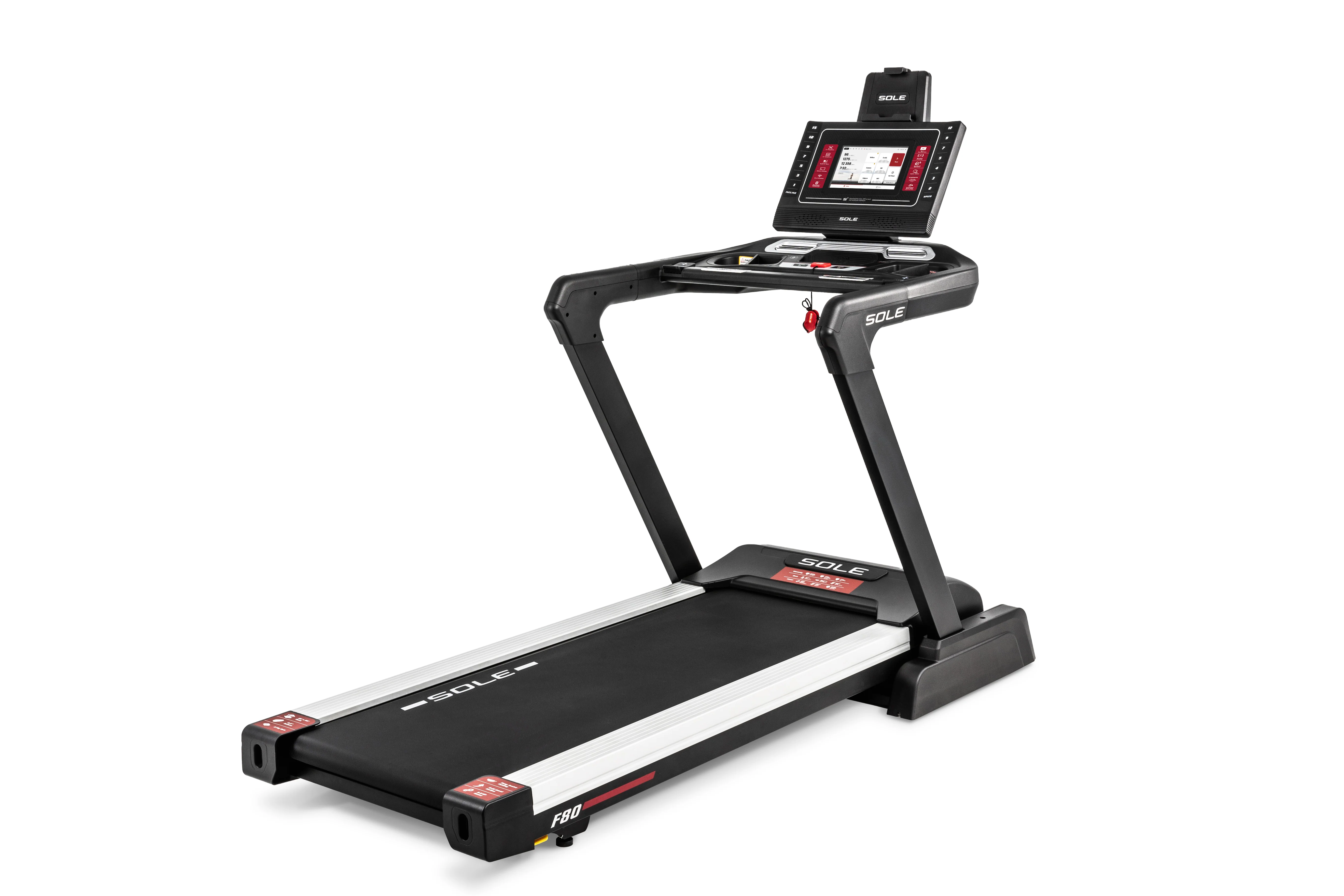
The F80's pitch is not only more power. It is fewer compromises. The deck is wider than the F63, the motor is stronger, the console is more modern, and the parts/deck warranty period is longer. For a buyer who plans to run several times per week, share the machine with another adult, or keep the treadmill for years, those upgrades are easier to justify.
The subscription angle also matters. Sole's F80 page directly compares its no-required-membership setup against subscription-led competitors and says built-in apps and core features work without a paid training plan. We would not treat brand comparison tables as neutral third-party evidence, but the ownership model itself is relevant. If you already use YouTube, Peloton App, Zwift, Apple Fitness, or simple manual workouts, the F80 lets you bring your routine instead of forcing a new one.
What Sole Gets Right
The clearest advantage is ownership simplicity. Some connected treadmills feel incomplete unless you keep paying for a class library. Sole's product pages position the F63 and F80 as machines that work from day one without a required subscription. That is useful for households that want predictable long-term cost.
The second advantage is hardware-first design. Both the F63 and F80 have full-length 60 inch decks, incline training, folding mechanisms, and lifetime frame and motor warranties. The F80 adds a wider 22 inch deck and a higher listed weight capacity, which can matter for stride confidence and household sharing.
The third advantage is straightforward usability. Independent coverage from Good Housekeeping and SELF repeatedly points to the F63's clear controls and practical extras rather than treating it as a luxury entertainment machine. For many buyers, that is the point: a treadmill should be easy to start, easy to stop, and easy to adjust mid-workout.
Where Sole Treadmills May Frustrate Buyers
Sole treadmills are not tiny. Even the folding models still take up serious floor space and weight. The F63 official page lists assembled dimensions of 77 inches long by 35 inches wide by 67 inches high and an item weight of 224 lbs. The F80 is larger at 82.5 inches long by 38 inches wide by 66 inches high, with an item weight of 274 lbs. You should measure the room, the folded storage path, and the delivery route before buying.
The second issue is entertainment expectations. The F80 has a touchscreen and preloaded apps, but the F63 uses a simpler 6.5 inch backlit LCD. If you want a premium studio screen, coached live classes, and a polished content ecosystem, Sole may feel more utilitarian than exciting.
The third issue is pace stability at the lower end of the line. SELF's note about the F63 feeling shaky at faster speeds is important. A walker or casual jogger may never notice it. A runner doing fast intervals might.
F63 vs F80: Which Sole Treadmill Should You Choose?
Choose the F63 if you want the lower-cost path into a real home treadmill, mostly walk or jog, and are comfortable with a simpler screen. Its 20 x 60 inch deck, 3.0HP motor, 325 lb capacity, and 15 incline levels are enough for many home routines. It is also the more sensible choice for buyers who want to test whether a treadmill habit will stick before spending closer to premium territory.
Choose the F80 if you already know you will use the treadmill regularly. The wider 22 x 60 inch deck, 3.5HP motor, 350 lb capacity, touchscreen, Wi-Fi, preloaded apps, and longer parts/deck coverage make it better suited to shared households and more serious running.
Do not choose either one if your main constraint is tiny-apartment storage. A compact walking pad or under-desk treadmill may fit that use case better, even though it will not replace a full running treadmill.
Internal Reading For Education And Home Routine Buyers
If you are building a broader home learning or remote-work setup, you may also want to compare software and learning tools alongside equipment choices. Our /reviews/italki-live-tutoring-review/ covers live language tutoring fit, /reviews/movavi-academic-review/ looks at classroom video creation, /reviews/covenant-eyes-review/ covers accountability software tradeoffs, and /reviews/italki-review/ gives a broader look at online tutoring decisions.
FAQ
Are Sole treadmills good for beginners?
Yes, especially the F63. Its official specs cover the basics beginners usually need: a full-length deck, incline levels, pre-programmed workouts, and simple controls. Good Housekeeping also frames it as a dependable option for beginners and casual runners.
Is the Sole F80 worth the upgrade over the F63?
The F80 is worth considering if you will run often, want a wider deck, need a higher weight capacity, or prefer a touchscreen with built-in apps. If you mostly walk or jog and want to control spending, the F63 is the more practical starting point.
Do Sole treadmills require a subscription?
Sole promotes the F80 around no required subscription, and the F63 also works as a traditional treadmill with built-in programs. You can still use external apps or streaming services, but the core treadmill function is not locked behind a paid class membership.
Are Sole treadmill prices stable?
No. Fitness equipment prices and promotions change often. The F63 and F80 prices in this review were checked on June 11, 2026 from Sole's official product pages. Always check the current product page before making a purchase decision.
Is the Sole F63 good for serious runners?
It can work for some runners, but it is better positioned for walkers, joggers, and moderate running. SELF reported that testers found it could feel shaky at faster paces. If you plan frequent fast runs, the F80 or another heavier-duty model is the safer comparison point.
Bottom Line
Sole treadmills are most compelling when you want durable home fitness hardware without turning your treadmill into another subscription. The F63 is the value-oriented entry point for walking and moderate jogging. The F80 is the stronger long-term choice for heavier use, shared households, and buyers who want a wider deck with more built-in tech.
The right choice depends less on the logo and more on your routine. If the treadmill will support daily movement between work, study, and family obligations, Sole's simple ownership model is a real advantage. If you need a compact walking pad or a premium studio-class screen, look elsewhere before paying for more treadmill than your space or habits can support.
Title Candidates
- Sole Treadmills Review: F63 and F80 Buying Guide
- Sole F63 vs F80: Which Treadmill Fits Your Home Routine?
- Is a Sole Treadmill Worth It Without a Subscription?
- Sole Treadmills Review for Home Office Walkers and Runners
- Before You Buy a Sole Treadmill, Compare These Tradeoffs