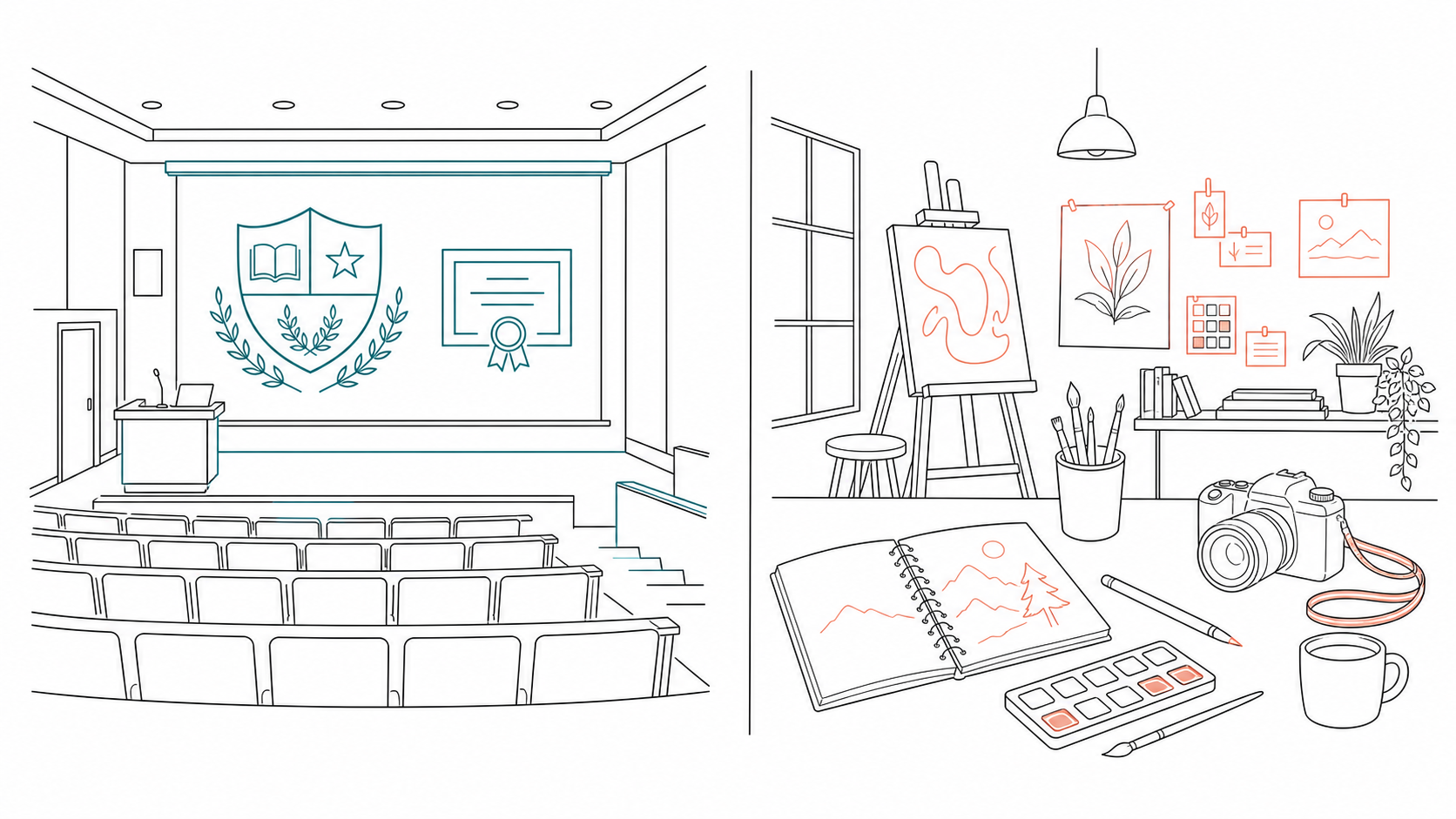
edX and Skillshare appear on the same lists of "best online learning platforms," but they rarely compete for the same learner. One is built around university lecture halls and credentials — the other around sketchbooks and project briefs. If you've been comparing the two, the confusion is understandable: both let you learn online at your own pace, both are free to browse, and both have millions of users. But their core models are fundamentally different.
This comparison cuts through the overlap to show exactly where each platform wins, who each one is designed for, and the scenarios where picking the wrong one wastes both money and time. The editorial team at aspectsinspire.com evaluated both platforms based on publicly available course catalogs, pricing pages, and learner community feedback — see our editorial policy for how we approach platform assessments.
edX vs Skillshare: quick comparison
| Feature | edX | Skillshare |
|---|---|---|
| Pricing model | Pay-per-certificate ($50–$300 each) | Subscription (~$168/year or ~$14/month) |
| Free access | Audit most courses (no certificate) | 7-day free trial, then paid |
| Course catalog | 4,000+ courses from 250+ institutions | 30,000+ creative classes |
| Content focus | STEM, business, humanities, professional | Illustration, design, photography, video |
| Certificates | Yes — verified, accredited by universities | No certificates issued |
| Learning format | Structured with deadlines, graded assignments | Short project-based classes, no grades |
| Standout content | Harvard CS50, MIT 6.00x, MicroMasters | Design by Aaron Draplin, illustration by Tom Froese |
| Graduate pathways | MicroMasters and MicroBachelors programs | None |
| Best for | Academic and career-track learners | Creative learners and portfolio builders |
edX: academic depth at a per-course price
edX was founded by MIT and Harvard in 2012 as a nonprofit to make university education accessible online. Today it operates as part of 2U (which acquired edX in 2021 for $800 million before filing for bankruptcy in 2024) but continues to deliver courses from Harvard, MIT, Berkeley, Columbia, and more than 250 partner institutions globally.
The platform's strength is academic depth. Harvard's CS50 is widely considered one of the best free introductory computer science courses available anywhere online. MIT's Python and data science programs are similarly rigorous. This isn't certificate-mill content — it's graded coursework, peer interaction, and structured learning at a level that prepares you for graduate programs.
The trade-off is pricing. Auditing is free — you can watch all lectures and access readings — but submitting graded assignments or receiving a verified certificate costs $50 to $300 per course depending on the program. MicroMasters and MicroBachelors programs, which span multiple courses, can cost $600 to $1,500 for the full sequence. If you need three or more credentials, that cost compounds quickly. For a deeper look at edX's full catalog, certificate programs, and pricing structure, see our edX deep dive.
edX wins when: you need verifiable credentials, you're studying STEM or business at university level, or you're working toward a graduate degree pathway through a MicroMasters program.
Skillshare: unlimited creative classes for one price
Skillshare is a subscription platform focused exclusively on creative and professional skill development. For roughly $168 per year (or $14/month), you get unlimited access to more than 30,000 classes in illustration, graphic design, photography, video editing, UI/UX design, writing, and related creative fields.
The platform's model is project-based rather than lecture-based. Each class runs 30 to 90 minutes and ends with a brief requiring you to produce something — an illustration, a design layout, a short film clip. The projects are shareable, which means Skillshare doubles as a portfolio-building tool. Top instructors like Aaron Draplin (graphic design), Tom Froese (illustration), and Brooke Glaser (photography) are working practitioners with distinctive teaching styles, not academics reading from slides.
What Skillshare explicitly doesn't offer: certificates of completion. The platform has made a deliberate choice to focus on demonstrated skills rather than credentials. If you want to show you've studied illustration on Skillshare, you share your class project — there's no certificate to attach to a LinkedIn profile. For learners who need formal recognition, this is a hard limitation. For portfolio-builders and hobbyists, it often doesn't matter.
Skillshare wins when: you want creative skills at an affordable subscription rate, you're building a visual or video portfolio, and you don't need formal credentials. For more details on Skillshare's catalog and subscription value, see our Skillshare deep dive.
Where edX and Skillshare genuinely differ
Price structure
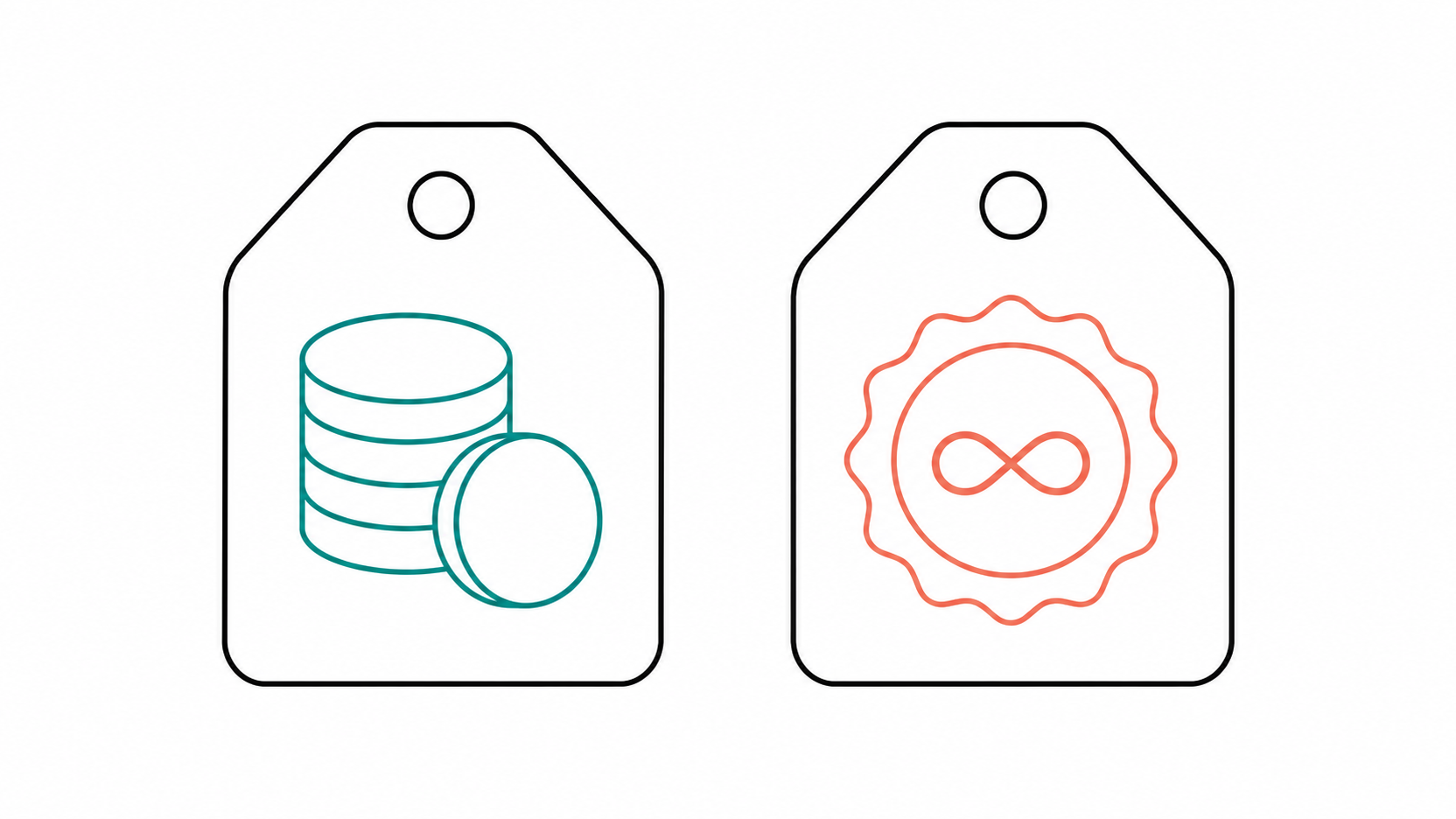
This is where the platforms diverge most sharply. Skillshare offers unlimited access for a flat fee. edX charges per course or per certificate — which is flexible if you only need one or two specific programs but becomes expensive fast if you're exploring across subjects.
For context: three edX verified certificates (at $100 average each) cost $300 — nearly double a full year of Skillshare. If you're taking multiple edX courses, compare the total against Coursera Plus, which bundles certificates across a broader topic set for $399 per year.
Certificate value
edX certificates carry genuine academic weight because they're issued by institutions like Harvard, MIT, and Columbia. A verified edX certificate specifies the institution and the course, making it recognizable to employers and graduate admissions offices familiar with the partner university. edX MicroMasters programs can even earn you credit toward a full master's degree at certain participating universities.
Skillshare offers no certificates. The only output is your class project, which you can share publicly in the Skillshare community or add to an external portfolio. For creative roles where work samples matter more than credentials, this is often sufficient. For academic admissions or roles that require formal credentials, it's a disqualifying limitation.
Learning format
edX courses follow a university-style structure: scheduled deadlines, graded assignments, peer-reviewed projects, and discussion forums. Some courses run 4 to 16 weeks with a defined syllabus. This format suits learners who thrive with structure and external accountability.
Skillshare classes are self-contained, often completable in under two hours, and built around a single project. There are no deadlines, no grades, and no peer review in the academic sense — though community members can comment on your project. This suits learners who prefer to move at their own pace and want immediate, tangible output from each session.
Content overlap
Almost none. edX's catalog is strongest in STEM (CS50, data science, machine learning), business (MBA-adjacent programs from Wharton and IE Business School), and humanities. Skillshare is creative-only: illustration, design, photography, video, and adjacent professional topics like freelancing and productivity.
If you search for "graphic design" on edX, you'll find a handful of university-taught design theory courses. On Skillshare, you'll find thousands of hands-on design classes from working designers. The reverse applies: search for "machine learning" on Skillshare and results dry up quickly. On edX, you'll find dozens of rigorous programs from MIT and top universities.
Who should choose edX
- You're studying STEM, data science, computer science, or engineering and need structured coursework
- You need a verified certificate to demonstrate learning to an employer or admissions committee
- You're exploring a MicroMasters or MicroBachelors pathway that could lead to graduate credit
- You learn best in a structured environment with deadlines, graded assignments, and peer interaction
- You only need one or two specific courses (the per-certificate model stays cost-effective at low volume)
For more on edX's full catalog, pricing, and 2U situation, read our edX deep dive.
Who should choose Skillshare
- You're building creative skills in illustration, design, photography, video, or UI/UX
- You want unlimited access to short, project-based classes at an affordable flat rate
- You're working on a portfolio and need tangible outputs — not certificates — from your learning
- You prefer exploring multiple topics without committing to long structured courses
- Certificates are not a requirement for your current goals
If you're comparing Skillshare against Udemy for creative learning — particularly if you value lifetime course access — see our Udemy vs Skillshare comparison for a detailed breakdown of both platforms' subscription versus per-course models.
FAQ
Is edX or Skillshare better for beginners?
It depends on the subject. Skillshare is better for creative beginners — its short, project-based classes (typically 30–90 minutes) let you produce something tangible in your first session, and the 7-day free trial costs nothing to try. edX is better for beginners in STEM subjects who want structured, university-level progression. Harvard's CS50 Introduction to Computer Science on edX is genuinely one of the best free beginner courses available online.
Does Skillshare offer certificates like edX?
No. Skillshare does not issue completion certificates. The platform focuses on skill development and portfolio building through class projects. edX offers verified certificates for most courses at $50–$300 each, carrying genuine academic credibility from Harvard, MIT, and 250-plus partner institutions. If you need a credential to show employers or academic institutions, edX is the clear choice.
Is edX free compared to Skillshare?
Both platforms offer free access with limitations. edX lets you audit most courses for free — you can watch lectures and access readings but cannot submit graded work or earn a certificate. Skillshare offers a 7-day free trial with full access, but requires a paid subscription after that. There is no permanent free tier on Skillshare. For ongoing free access to course content without paying, edX's audit option is the stronger choice.
Can I use edX and Skillshare together?
Yes, and the combination is logical for certain learners. edX provides academic and STEM depth for career credentials; Skillshare adds creative and design skills for portfolio work. A data analyst might take an edX data science program while using Skillshare to improve data visualization design. The two platforms almost never duplicate each other's content, so combining them avoids redundancy.
Which platform has better value — edX or Skillshare?
It depends on how many courses you need and in what areas. Skillshare at roughly $168 per year gives unlimited creative classes — excellent value if you use it consistently. edX charges $50–$300 per certificate and becomes expensive with multiple courses. For learners who need several certificates across diverse topics, compare edX against Coursera Plus ($399/year), which bundles certificates more efficiently at higher volume.
Does edX have creative courses like Skillshare?
Rarely. edX specializes in STEM, business, humanities, and professional development through university partnerships. Illustration, photography, graphic design, and video are Skillshare's domain. A few edX partners offer architecture or design theory courses, but the depth, instructor quality, and project-based focus of Skillshare's creative catalog is not matched on edX.
The bottom line
edX and Skillshare almost never compete directly. If you need a university-backed credential, STEM depth, or a graduate degree pathway, edX is the better platform — provided you're comfortable paying per certificate. If you want unlimited creative classes you can complete in an afternoon, Skillshare is the stronger choice at a lower annual cost.
The only scenario where this decision gets complicated is if you're on a tight budget and wondering whether one subscription can serve all your learning needs. It can't — not from either platform. edX doesn't cover creative skills. Skillshare doesn't cover academic STEM or issue certificates. Choose based on what you actually need to learn, not which platform has the better marketing.
This guide reflects publicly available information as of May 2026. See our about page for how we research and evaluate platforms.
References:
- edX course catalog and pricing — official edX platform
- Skillshare subscription pricing — official Skillshare pricing page
- edX MicroMasters programs overview — edX graduate pathway programs